What Makes Quantum Computing Different
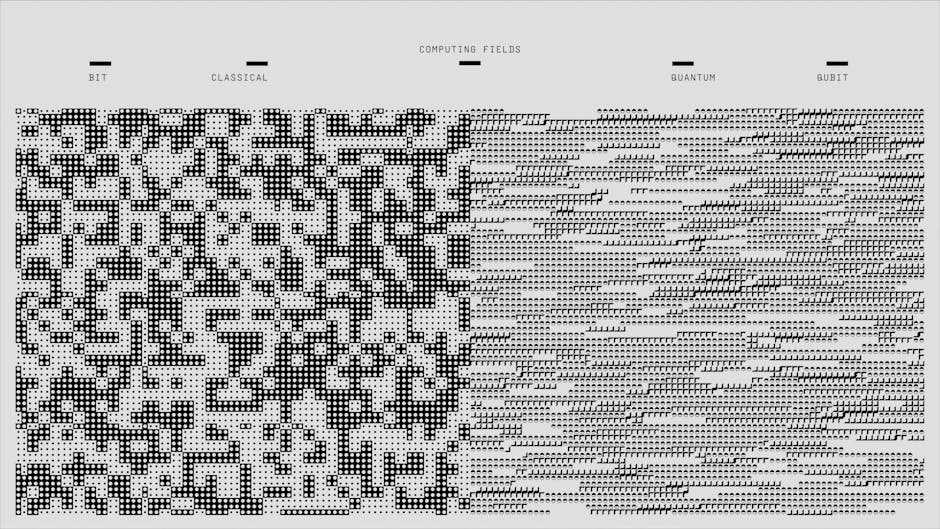
Classical computers run on bits ones and zeros. It’s a rigid system, and it’s done the job for decades. But quantum computing doesn’t play by those rules. It uses qubits, which can exist in multiple states at once, thanks to superposition. That means a qubit isn’t just a 1 or a 0 it can be both at the same time.
Then there’s entanglement, where qubits become linked. Change one, and the other reacts instantly, no matter the distance. It’s weird physics, but it gives quantum systems a major edge.
Put together, these features open the door to processing power that makes today’s machines look like typewriters. Quantum computers won’t just be faster they’ll be exponentially faster. For certain problems, especially complex ones like optimization or factoring big numbers, they’ll cut runtimes from years to seconds. That kind of brute force makes quantum computing a serious disruptor, especially in fields like cybersecurity.
Breaking Today’s Encryption
Today’s digital world leans heavily on encryption techniques like RSA and ECC. These systems work by depending on problems that are extremely hard for classical computers to solve like factoring huge prime numbers or finding discrete logarithms. Under normal circumstances, even powerful modern machines would need decades to crack them.
Quantum computing changes the equation. Shor’s Algorithm, a quantum method developed in the mid 90s, has the power to efficiently solve those very problems. Once scalable quantum computers become a reality, encryptions that once seemed ironclad will essentially become obsolete.
The implications are enormous. Everything from private messages and bank transactions to national security data is secured using methods quantum machines could dismantle in hours, or even minutes. The clock is ticking and industries relying on encryption can’t afford to ignore it.
Building Quantum Resistant Defenses
What Is Post Quantum Cryptography (PQC)?
Post quantum cryptography (PQC) refers to cryptographic algorithms designed to be secure against quantum computer attacks. These are not reliant on the mathematical problems like integer factorization or discrete logarithms that quantum algorithms such as Shor’s can easily solve.
Designed to withstand attacks from both classical and quantum computers
Does not require quantum hardware to implement
Can be deployed on current digital infrastructure
The Role of NIST in Standardization
The National Institute of Standards and Technology (NIST) is leading the global effort to develop standards for post quantum cryptography.
Launched a multi year global competition to evaluate PQC algorithms
Finalists and alternates are undergoing rigorous testing for performance and security
Final standards expected to emerge in the coming years, guiding industry adoption
Promising Quantum Resistant Algorithms
Several cryptographic families show strong potential in resisting quantum threats:
Lattice Based Cryptography: Strong candidates due to efficiency and proven hardness
Hash Based Cryptography: Suitable for digital signatures, with strong security foundations
Multivariate Cryptography: Uses equations over multivariate polynomials theoretically quantum resistant
These diverse approaches offer multiple pathways forward, ensuring there’s no single point of failure in the quantum secure future.
Hybrid Transition Strategies
While PQC standards are still being finalized, a practical approach for today is to adopt hybrid encryption strategies. These methods combine quantum safe algorithms with traditional encryption to create a layered defense.
Combining RSA or ECC with PQC: Maintains backward compatibility while preparing for future threats
Crypto agility: The ability to switch between algorithms easily based on emerging threats or standards
Organizations can start integrating these strategies now to ensure smoother migrations when new standards are finalized.
Quantum resistant encryption isn’t just a future concept it’s a strategic necessity that begins with preparation today.
Timelines, Hype, and Reality

Quantum computing isn’t ready for prime time, but the clock is ticking. While today’s machines can’t break RSA encryption yet, researchers agree that it’s no longer a question of if it’s when. That future breaking moment has a nickname: Q Day. Some say five years, others say ten. No one knows for sure. But it’s looming.
That uncertainty is fueling debate. One camp says it’s too early to panic quantum technology needs more time to mature. The other camp sees high stakes and long transition timelines and argues for action now. Once Q Day hits, encrypted data stolen today could get decrypted tomorrow. That risk has led governments, banks, and big tech players to quietly begin the migration to post quantum cryptography.
So while quantum systems aren’t rewriting cybersecurity just yet, serious people are betting they will. And they’re not waiting around to find out the hard way.
Opportunities for Better Security
Quantum computing isn’t just a threat it’s also a chance to build better defenses. Quantum key distribution (QKD) is one of the standout technologies. It uses the laws of quantum physics to share encryption keys in a way that’s, in theory, impossible to intercept without detection. In QKD, any attempt to eavesdrop alters the quantum state of the data, immediately signaling a breach. That’s not just secure it’s self defending.
But it’s not just about QKD. Quantum systems are making it possible to generate randomness at levels far beyond classical machines. In cybersecurity, randomness is power it helps build stronger encryption and more unpredictable protocols that are harder to crack. More entropy, fewer assumptions, better shields.
This all points toward a future where some systems could be immune or at least highly resistant to both classical and quantum based attacks. It’s early days, but the promise is real. Quantum secure infrastructure might be one of the very few things ready for what’s coming next.
What You Can Do Today
Quantum threats aren’t looming on some distant horizon they’re quietly creeping into today’s security conversations. If your organization deals with sensitive data, especially in critical infrastructure, it’s time to move past curiosity and into preparation. That means taking quantum readiness seriously. Key systems like utilities, finance, telecom, health can’t afford to be caught flat footed when quantum computing hits maturity.
Start by evaluating the tech ecosystem you rely on. Are your vendors actively investing in quantum resilient security? If they aren’t talking about it yet, that’s a red flag. There are already companies and researchers exploring how today’s stacks can survive tomorrow’s breakthroughs. Keep tabs on them. One place to start: this overview on quantum and security.
Next, train your teams in cryptographic agility: the capability to switch protocols without rewriting your entire infrastructure. You don’t need to rip out existing systems, but you do need to know where your weak links are and how to pivot when standards evolve. Think of it like planning for a software update you know is coming, but can’t schedule yet.
Finally, stay in step with official standards. NIST is pushing post quantum cryptography forward and global policy is catching up fast. Ignore it, and you risk being outgunned by the math. Follow it, and you stay in the game.
No panic. Just posture. Quantum ready may not be urgent for everyone today but for the ones who matter most, it already is.
One Final Note
Quantum isn’t a buzzword. It’s the next fault line in the digital battle for security. What today seems theoretical is approaching deployment at a pace that smart organizations can’t afford to ignore. Once scalable quantum computing arrives, current encryption methods lose their armor.
This isn’t about tech optimism it’s about survival. Digital systems that handle sensitive data, critical infrastructure, or long term confidentiality must be built for a quantum enabled world. Waiting means gambling with exposure.
Future proofing isn’t just wise it’s strategic. Learn how to get started: quantum and security.
 Marylou Grant is a key helper at The Code Crafters Hub, where she contributes significantly to the development and growth of the platform. Her expertise in software development and her passion for technology make her an invaluable asset to the team. Grant's work involves everything from assisting with content creation to ensuring the site's functionalities meet the highest standards, which helps in delivering a seamless experience to users.
Her dedication to The Code Crafters Hub is evident in the quality of the updates and insights she helps provide. Grant’s role in the project reflects her commitment to advancing the field of software development and keeping the hub at the cutting edge of industry trends. Based in Warren, MI, she plays a pivotal role in ensuring that the platform continues to offer relevant and timely information on web development, game development, IoT, and cybersecurity.
Marylou Grant is a key helper at The Code Crafters Hub, where she contributes significantly to the development and growth of the platform. Her expertise in software development and her passion for technology make her an invaluable asset to the team. Grant's work involves everything from assisting with content creation to ensuring the site's functionalities meet the highest standards, which helps in delivering a seamless experience to users.
Her dedication to The Code Crafters Hub is evident in the quality of the updates and insights she helps provide. Grant’s role in the project reflects her commitment to advancing the field of software development and keeping the hub at the cutting edge of industry trends. Based in Warren, MI, she plays a pivotal role in ensuring that the platform continues to offer relevant and timely information on web development, game development, IoT, and cybersecurity.